Skip to content

Business website design and development: fast, bilingual company and catalogue sites built with Next.js, from Sfax, Tunisia Websites that load fast and get found

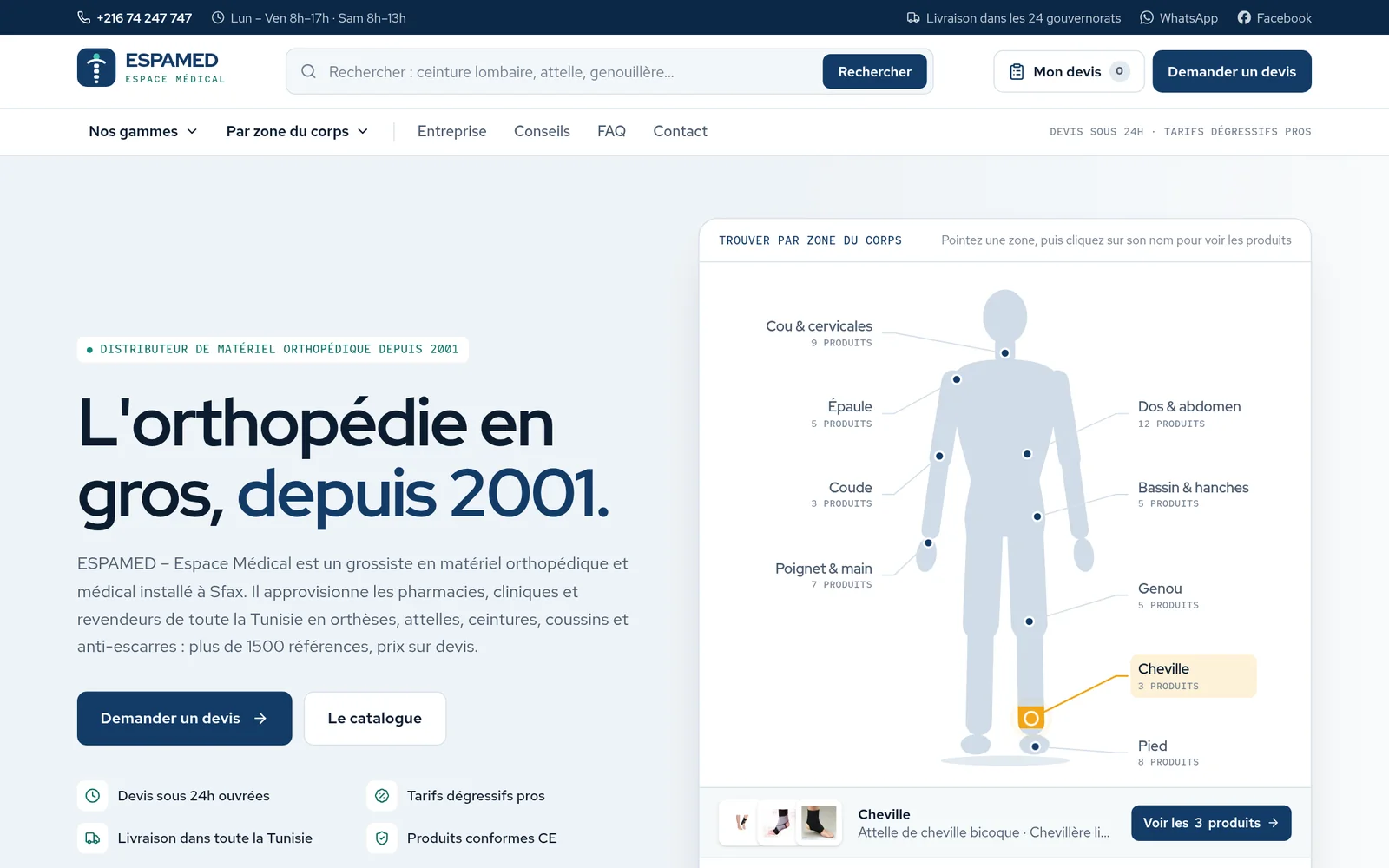
ANTASY IT (a.it) designs and builds business websites and product catalogues that load fast on a phone and are structured for search engines and AI assistants, in one language or two. Quote requests reach your mailbox, and we host and maintain the site afterwards. ESPAMED’s French catalogue at espamedical.com is one of them.

For
Companies that sell on quotes, not carts
Languages
French, English or both; Arabic on request
Stack
Next.js · TypeScript · Tailwind CSS
Running at
ESPAMED (espamedical.com) · this site
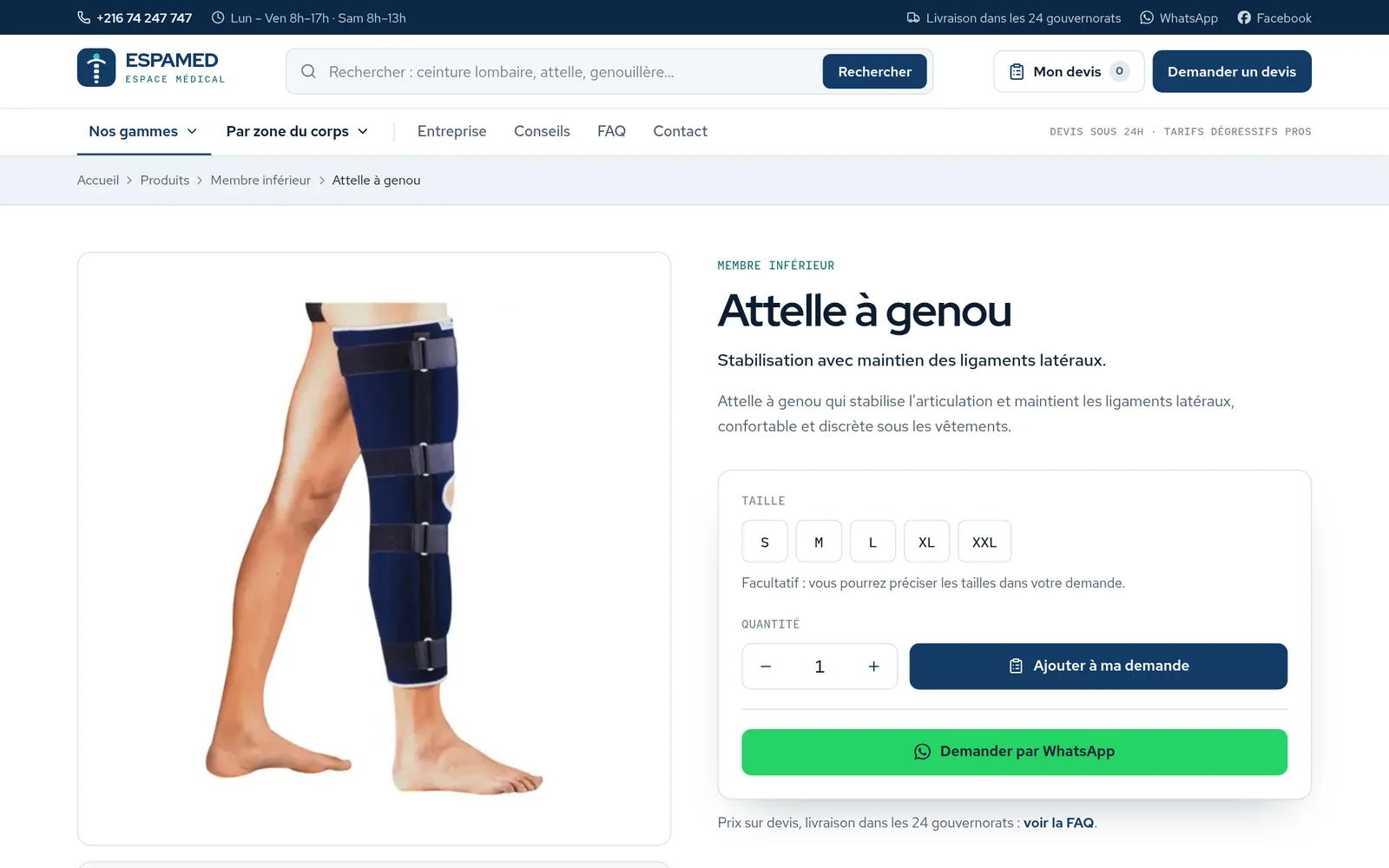
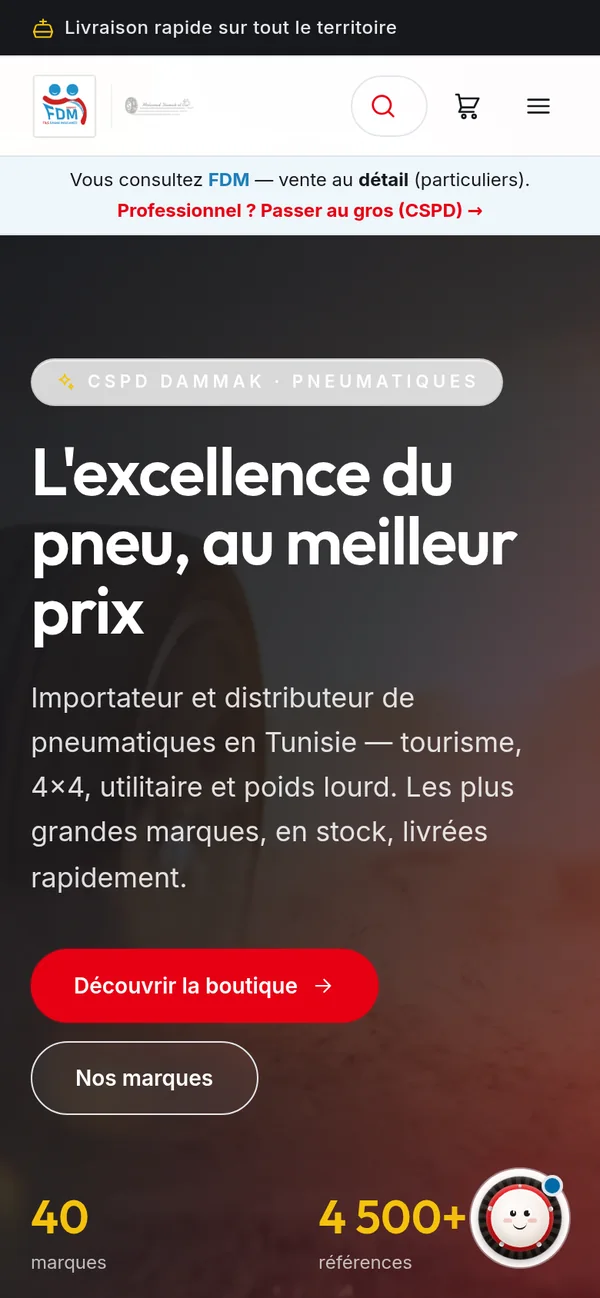
Business websites we built, in real screenshots.

The espamedical.com website on a laptop
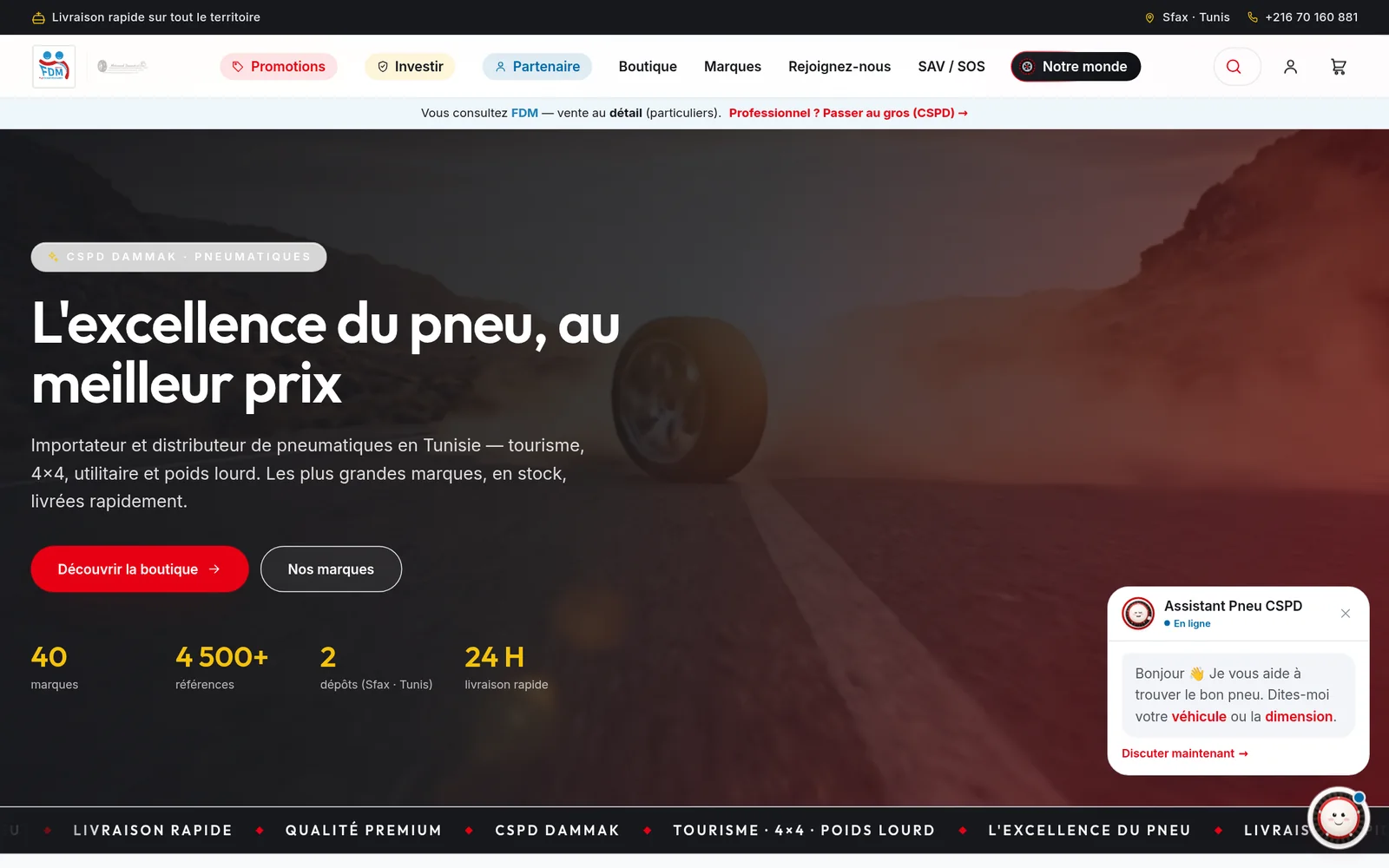
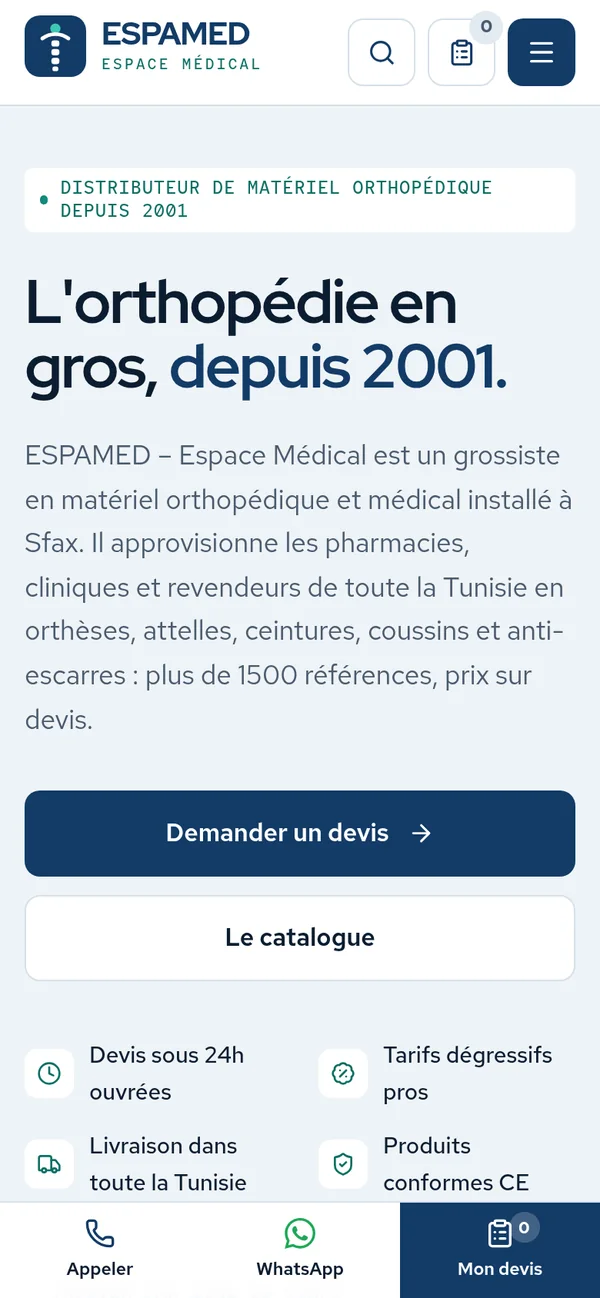
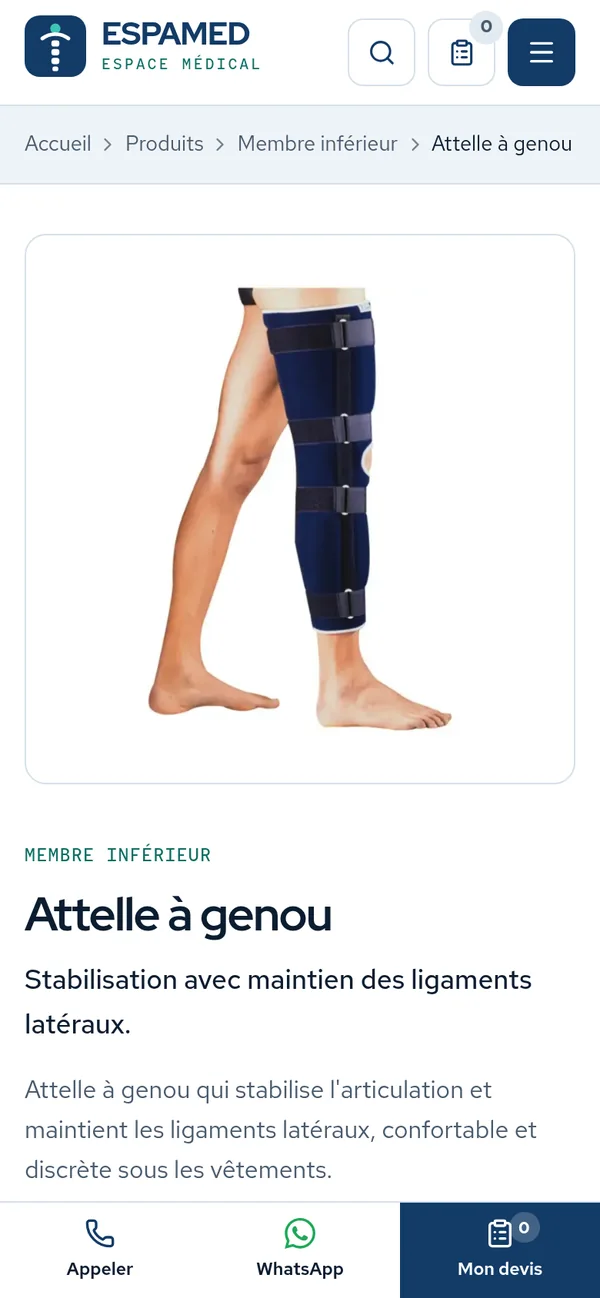
ESPAMED · catalogue and quote websiteESPAMED · product pageMohamed Damak et Cie · website and store

Overview

What should a business website do for a company?

A business website should answer a buyer’s first questions (what you sell, to whom, where, how to reach you) faster than a competitor’s site, then turn the visit into a call, a WhatsApp message or a quote request. ANTASY IT builds sites for that job: fast, bilingual, and structured for search engines and AI answers.

Company sites tend to fail in the same places: a first page that is slow on a mobile connection, a contact form that never delivers, a catalogue published as a PDF that search engines cannot read, and a second language that is a machine translation of the first.

We build websites as small, fast applications. Pages are rendered on the server, images are sized for each screen, and forms deliver to your mailbox and keep what the visitor typed if something is refused. Every page has its own title, description and structured data, so that search engines and AI assistants describe your company correctly.

A company site (what the French call a site vitrine) presents the business. A catalogue site adds product pages and quote requests, without prices or a cart. If customers must order and pay online, that is e-commerce, and it has its own page.

Typical projects

  • A company site in French and English, with a contact form that really reaches you
  • A product catalogue with quote requests for professional buyers
  • The redesign of an existing site, keeping its content and its addresses
  • A site that must be found for a few precise searches in your city or sector

Problems we solve

Why a company site stops bringing requests

A contact form that fails in silence?

A form that says “sent” while nothing reaches you is worse than no form. On the sites we build, messages go out through your own mailbox’s mail server, and a refused submission keeps what the visitor typed. On ESPAMED’s site we fixed a form that emptied itself after every refused submission.

Products that buyers cannot find?

Buyers search by need, not by your catalogue’s structure. ESPAMED’s site lets visitors find orthopaedic products by clicking an area of the body on an anatomical chart, as well as through categories, and each category opens with a one-sentence definition that search engines can quote.

Invisible to AI assistants?

Assistants such as ChatGPT or Perplexity can only cite what they can read. We serve complete HTML, publish structured data and a sitemap, add an llms.txt file where useful, notify search engines of changes through IndexNow, and check that your CDN is not blocking the crawlers you want.

A site nobody dares to update?

Content lives either in a CMS that your team edits, when it changes every week, or in versioned files that we update on request, when it changes a few times a year. ESPAMED’s catalogue works the second way: the client sends the changes, we apply and publish them.

What we build

What a website we deliver includes

Small sites and large catalogues share the same foundations. The difference is in the number of page types, not in the care given to each.

  • Pages and structure

    A clear tree: offer, proof, company, contact.

    • One topic per page
    • Localised addresses in each language
    • Breadcrumbs and internal links
  • Catalogue and quotes

    Product pages without prices, and requests that collect what you need to answer.

    • Categories and product sheets
    • Quote basket or request form
    • Requests delivered by e-mail
  • Search and AI readiness

    Each page described for Google and for assistants.

    • Unique titles and descriptions
    • Structured data (JSON-LD)
    • Sitemap, IndexNow and llms.txt
  • Speed

    Fast on a mid-range phone and a mobile connection.

    • Server rendering, little JavaScript
    • Images resized for each screen
    • Fonts loaded without layout shift
  • Languages

    Each language written for its readers, not machine-translated.

    • French and English; Arabic and right-to-left on request
    • One address per language, with hreflang
    • A language switch that lands on the same page
  • Contact and local presence

    Every way to reach you, identical everywhere.

    • Phone, WhatsApp, e-mail and a map link
    • Address and hours matching your Google profile
    • Legal notice and privacy page

In production

Two sites you can check yourself

Both are public. Open them on your phone and view the source: that is the best description of what we deliver.

ESPAMED

Orthopaedic and medical supplies wholesaler, since 2001 · Sfax

The current website of an orthopaedic and medical supplies wholesaler founded in 2001: a catalogue searchable through an anatomical chart and by category, quote requests without prices, a legal notice, structured data and IndexNow. We designed this version, moved it to the client’s own domain with permanent redirects, and host it. Its footer reads “Site réalisé par ANTASY IT”.

What we builtVisit site ↗ (opens in a new tab)

ait-tun.com

Our own website

ait-tun.com

The site you are reading: Next.js 16 and React 19, English and French with localised addresses, structured data on every page, llms.txt files for AI assistants, a share image generated for each page, and a contact form that keeps what you typed if something is wrong.

Checked from the outside

Every site we ship is checked the way visitors and crawlers see it: on a phone-sized screen, through the CDN, with the HTML a search engine receives. That is how we caught pages a CDN had been keeping for a year, and a form that emptied itself.

How we deliver

From the brief to a site that answers

Our five stages, sized for a website: shorter, but with the same checks before anything goes live.

  1. 01

    Brief

    Who must find you, through which searches, and what they should do next: call, write or ask for a quote.

  2. 02

    Structure and copy

    Page tree, addresses in each language, and texts written per language, with you.

  3. 03

    Design and build

    Design and pages delivered on a test address, checked on phones first.

  4. 04

    Launch

    Domain switched, old addresses redirected, forms tested end to end, sitemap submitted.

  5. 05

    Run

    Hosting, updates, content changes on request, and an eye on how pages are indexed.

Four things we never ship

  1. An untested form

    Every form is tested from the public site to the mailbox before launch.

  2. A page without its own title

    Each page and each language has a unique title and description.

  3. Text hidden behind animation

    The main heading is visible at once; motion never delays what visitors came to read.

  4. A dead old address

    Every address of the previous site is kept or permanently redirected.

How we work

Which site

Company site, catalogue or e-commerce: which one do you need?

Choose a company site to present who you are and get contacted. Choose a catalogue site when buyers need product details but prices are negotiated, so they request quotes. Choose e-commerce when customers order and pay online. ANTASY IT builds all three, and a site can grow from one to the next without being rebuilt.

Company site, catalogue site or e-commerce (October 2026)A business application (ERP, CRM, client portal) starts where the website stops: when the visitor becomes a signed-in user with records and rights.
CriterionCompany siteCatalogue siteE-commerce
GoalPresent the company, get contactedPresent products, collect quote requestsTake orders and payments online
Prices shownNoUsually notYes
What the visitor doesCalls, writes or visitsBuilds a quote requestOrders, then pays online or on delivery
Back officeContent onlyProducts and requestsProducts, stock, orders, customers
Our exampleThis websiteESPAMED (espamedical.com)Key Brothers; the Damak group platform

Stack

Why Next.js rather than WordPress for a business website?

WordPress is the right choice when your team edits many pages every day and accepts plugin upkeep. Next.js suits sites that must be fast, secure and precisely structured: pages are rendered on the server, there is no plugin layer to patch, and every tag search engines read is under control. ANTASY IT builds business websites in Next.js.

  • Next.js
  • React
  • TypeScript
  • Tailwind CSS
  • Strapi
  • Cloudflare

ESPAMED’s site runs on Next.js 16 with React 19, TypeScript and Tailwind CSS v4, and its content lives in typed files. When a team needs to edit its own content, we add Strapi as a headless CMS. Both sit behind Cloudflare, with cache rules that let a change appear at once.

Budget

How much does a business website cost in Tunisia?

The price of a business website depends on the number of page types, the languages, whether there is a catalogue and how many products it holds, who writes the texts, the forms and integrations, and whether we host and maintain it. ANTASY IT quotes after a short brief; our pricing page explains how projects are billed.

What moves the budget

  • The number of page types (not of pages): home, service, product, article
  • Languages, and who writes each version
  • Catalogue size, and the photos to prepare
  • Forms, quote baskets and where requests must go
  • Content edited by your team in a CMS, or by us
  • Hosting, updates and content changes after launch

FAQ

Website questions

Can we edit the website ourselves?

Yes, if you need to. For content that changes often we add Strapi, a content manager where your team edits pages, products and images with its own logins and rights. For content that changes a few times a year, we keep it in versioned files and apply your changes on request, which is simpler and cheaper to run.

Will the website rank on Google?

Nobody can honestly promise a position. What we control is everything Google needs to understand the site: fast pages, one topic per page, unique titles and descriptions, structured data, a sitemap, clean redirects and correct language tags. The rest comes from your content, your reputation and a complete Google Business Profile.

Who owns the domain and the hosting account?

Your domain should be registered in your company’s name and stay under your control. On ESPAMED, the domain and its Cloudflare account belong to the client, and we host the site itself. If you prefer your own hosting, we deploy there; if you use ours, we take care of updates, certificates and backups.

Can you redesign our site without losing what already ranks?

Yes. We first list the current addresses and the pages that bring visits, then keep or permanently redirect each of them, and carry titles and content over where they work. ESPAMED’s current site carried over the previous version’s texts and catalogue, updated as the client asked, under a new design; the former address redirects permanently to the new domain.

Do you write the texts?

We can write and structure them with you. We need your facts (products, references, certifications) and never invent any. Each language is written for its readers rather than translated word for word, and each page answers one question clearly enough to be quoted by a search engine or an AI assistant.

How fast will the site be?

We set a budget before design starts: the main content of a page should appear within 2.5 seconds on a mid-range phone, the threshold Google uses for a good Largest Contentful Paint. We measure real pages before launch and keep JavaScript to what the interactions actually need.

Tell us what a visitor should do next

Call, write, or ask for a quote: tell us which, and for which searches you want to be found. We will propose the structure.